
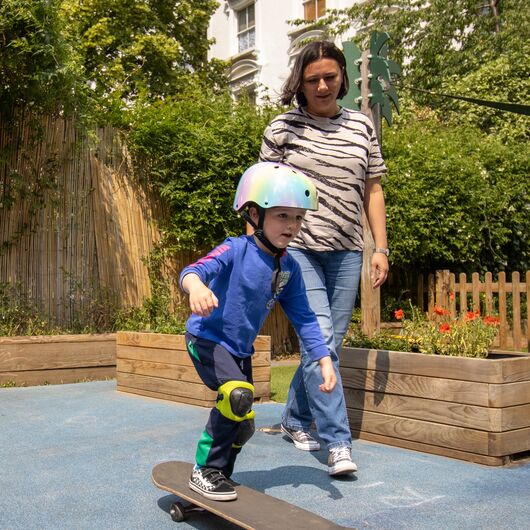
Talking Early Years: In Conversation with Ellen Sandseter
Risky Play or Not Risky Play – That is the Question! Ellen Sandseter is a well-known professor at Queen Maud University College for Early Childhood Education in Trondheim, Norway…
February 20th 2026
Understand why children’s voices are a right, not a reward
Learn how the Lundy Model supports meaningful child participation
Explore what rights-based practice looks like in everyday early years settings
Reflect on babies’ rights and how agency begins before language
Connect social justice to real decisions in pedagogy, leadership and policy
Children’s rights in early years are not an abstract ideal. They are lived out daily in the relationships, decisions and environments that shape children’s experiences. In this episode of Learning by Living, we are joined by Professor Laura Lundy, one of the most influential voices in children’s rights globally, to explore what it truly means to listen to children and why social justice must begin in early childhood.
This conversation was recorded to mark World Day of Social Justice, recognised by the UN on 20 February. At LEYF, social justice means using early childhood education intentionally to reduce inequality, widen opportunity and strengthen dignity, belonging and agency for children, families and communities. Education is never neutral. Every choice either reinforces disadvantage or helps to disrupt it.
Professor Lundy’s work has profoundly shaped how children’s participation is understood in policy and practice worldwide. Central to her thinking is the idea that children are rightsholders and citizens, not future adults in waiting. They are capable, relational and entitled to be heard in ways that genuinely influence decisions affecting their lives.
In the episode, Laura reflects on her early work as a lawyer in Northern Ireland, where she led research for the first Children’s Commissioner. Although adults believed they were listening to children, the children themselves felt unheard. Their views were often trivialised, filtered or ignored. This gap became the foundation for what is now known as the Lundy Model.
The Lundy Model goes beyond simply encouraging children to speak. It sets out four essential elements of meaningful participation: Space, Voice, Audience and Influence. Children need a safe and voluntary space to express views. They need genuine opportunities to speak. They need a real audience who listens. And crucially, what they say must influence outcomes. Without all four, participation risks becoming tokenistic.
Laura also shares a powerful insight that took many years to fully articulate. Space and voice belong together. Audience and influence belong together. You cannot invite children to speak without creating safety and choice. And you cannot claim to listen unless their ideas reach people who can act on them.
The conversation extends into rights-based education in everyday practice. Drawing on Article 12 and Article 29 of the UN Convention on the Rights of the Child, Laura reminds us that children learn about their rights by experiencing them, not by seeing posters on the wall. Respect, agency and equality are communicated through countless small decisions made each day.
Importantly, the episode also explores babies’ rights. Even before language, babies express preference, curiosity and distress. Adults who are attuned to these signals are already practising children’s rights in early years settings.
This episode connects closely with our wider thinking on social justice and education, explored further in the Learning by Living podcast series and in our work on social justice in early childhood education.
You may also enjoy our Talking Early Years episode with Sally Hogg where we discuss: Do you think babies are a focus of care and education policy enough? Do we have a baby policy blind spot?
Children’s rights in early years recognise children as rightsholders from birth, with the right to be heard, respected and included in decisions affecting their lives.
Professor Laura Lundy is a leading children’s rights expert whose research has shaped global policy and practice on child participation.
The Lundy Model is a framework for meaningful child participation based on Space, Voice, Audience and Influence.
Listening to children supports social justice by reducing inequality and ensuring children experience dignity, belonging and agency.
Yes, babies have rights from birth and express agency through behaviour, emotion and interaction long before language.
Children’s rights are upheld through everyday relationships, routines and decisions where children’s views genuinely influence outcomes.
How do I listen to the Talking Early Years Podcast with June O’Sullivan?
Risky Play or Not Risky Play – That is the Question! Ellen Sandseter is a well-known professor at Queen Maud University College for Early Childhood Education in Trondheim, Norway…

The Power of Intergenerational Nurseries The world is changing fast. Technology is accelerating how we live, work and even care, but in that rush, you can’t help but…
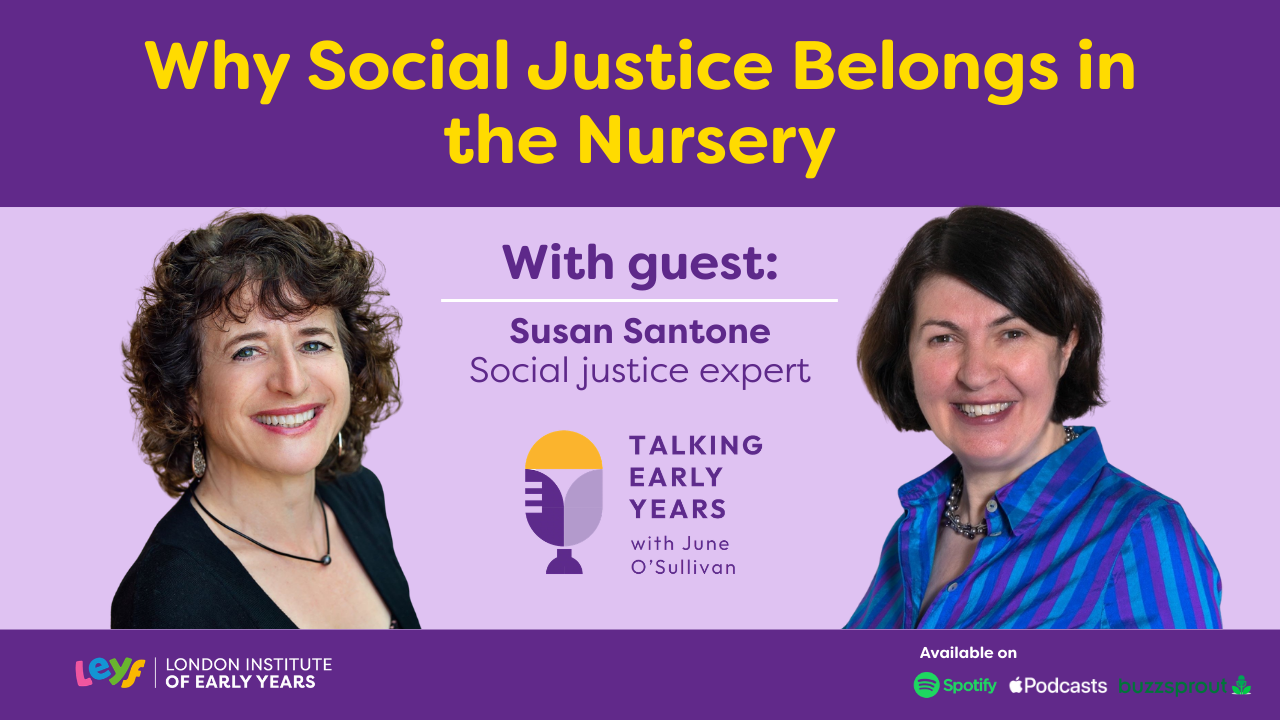
Why listen to this podcast? Understand why social justice begins in the nursery, not later in life Reflect on how fairness, empathy and belonging are…