

Children’s Rights in Early Years: Lessons We Can’t Ignore
Why listen to this episode? Understand why children’s voices are a right, not a reward Learn how the Lundy Model supports meaningful child…
March 19th 2026
Understand why social justice begins in the nursery, not later in life
Reflect on how fairness, empathy and belonging are shaped through everyday experiences
Explore how educators can talk about equity, difference and inclusion with confidence
Learn why avoiding these conversations leaves children unprepared for the world
Consider the role of nurseries in shaping future citizens and communities
Social justice can sound lofty. Abstract. Something discussed in policy papers or parliamentary chambers. But the truth is, the seeds of fairness, compassion, sustainability and community are planted much earlier than that.
They’re sown in the nursery, long before children learn the language of politics. And if we don’t plant them early, we risk raising a generation who see inequality as inevitable rather than something they can change.
That was the heart of my conversation with Susan Santone, author of Reframing the Curriculum and one of the thinkers who most shaped my own PhD journey. My copy of her book is completely covered in sticky notes, which tells you everything you need to know.
Susan has spent decades helping educators weave social justice and sustainability into everyday practice. She reminded me of something I’ve always believed: young children may be small, but their world is deeply political.
At LEYF, pedagogy for social justice isn’t theory. It’s lived reality.
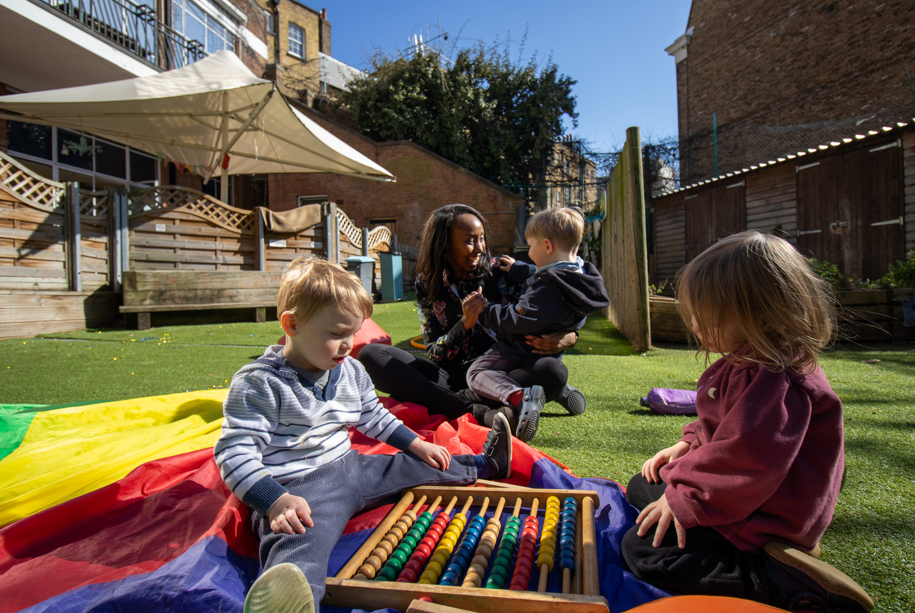
It’s the child who notices a friend hasn’t had a turn and decides to share.
It’s the boy who insists his friend with limited English should join the role-play.
It’s staff teams creating mealtimes where every culture is respected and every plate matters.
These aren’t small moments. They are early lessons in democracy, empathy and belonging.
This is how children begin to understand fairness. Through what they experience every day.
Susan spoke beautifully about access.
Who gets to play outside?
Who uses certain resources?
Whose voices are heard and whose are overlooked?
When we frame these everyday questions through fairness, we give children dispositions that last a lifetime: empathy, courage and agency.
These are the qualities that help children understand both themselves and others.
Of course, these conversations aren’t always comfortable. Talking about equity, exclusion or difference can feel risky with adults, never mind children.
But avoiding them doesn’t protect children. It leaves them unprepared for a complex world.
As we discussed, this isn’t about burdening young children with global crises. It’s about the here and now.
You don’t ask a five-year-old to solve climate change, but you can help them care for a garden and notice how things grow when we look after them together.
We also touched on the backlash, both here and in the US, against even naming social justice in education.
Supporting all children shouldn’t be seen as radical. And yet it is.
That’s precisely why nurseries must hold their ground as places where fairness and kindness aren’t add-ons. They are the foundation.
Susan’s wish, which I share, is that society finally recognises the political importance of nurseries.
We are not babysitters at the bottom of the education pecking order. With 80% of the brain developed by the age of two, we are shaping the citizens who will build tomorrow’s communities.
The Early Years must be unapologetic about putting social justice at its heart and giving educators the training, confidence and language to talk about fairness, equity and sustainability in ways children understand.
At LEYF, this is our daily mission. Our pedagogy for social justice is baked into our curriculum, our training and our community work.
And I invite everyone who cares about the future to join us. Because when we get it right in the nursery, we really can get it right in society.
In the nursery, fairness is not a slogan. It lives in turn-taking, inclusive play, shared meals, and whose voice is heard. These micro-moments are children’s first encounters with democracy, empathy and belonging, shaping dispositions that last far beyond early childhood.
Shielding young children from issues of equity, difference and care does not protect them. It leaves them ill-equipped for the world they are already navigating. Social justice in Early Years is grounded in the here and now through relationships, play and care for others and the environment.
Early Years settings are not peripheral to social change. With rapid brain development and identity formation happening in the first years of life, nurseries are shaping future citizens. Treating social justice as foundational, not optional, demands confidence, training and an unapologetic stance from the sector.
It means helping children understand fairness, inclusion and respect through everyday experiences such as play, relationships and shared routines.
It is not taught through abstract lessons, but through daily practice. Sharing, inclusive play and ensuring every child’s voice is heard all contribute.
Early experiences shape how children see the world. Supporting these conversations helps children develop empathy, confidence and a sense of belonging.
No. They are explored in simple, age-appropriate ways through real-life situations and interactions.
The Early Years shape future citizens. Nurseries play a key role in developing the values, behaviours and understanding that children carry into later life.
🎧 Listen to the full conversation with Susan Santone here
Why listen to this episode? Understand why children’s voices are a right, not a reward Learn how the Lundy Model supports meaningful child…
Why listen to this episode? Hear directly from Professor Barbara Rogoff on sociocultural learning and how children learn through participation Explore why culture and…
The Curiosity Code What makes people tick? Why do we care about certain brands—or causes—more than others? And how do we spark genuine emotional connection, not just polite head-nods?…