Technology is already shaping our nurseries, whether we consciously design for it or not. Some of it is obvious: Wi-Fi, tablets, digital observations, secure entry systems, communication with parents and the increasingly ubiquitous mobile phone. Other technology is almost invisible. Smart heating, lighting, ventilation, air-quality monitoring and energy-management systems are becoming part of how we create healthy, sustainable buildings. And now AI is accelerating the conversation about AI in Early Years education.
I have been writing about AI for some time, including in Nursery World, because I think Early Years needs to shape this debate rather than wait for decisions to be made elsewhere. My position has never been anti-technology. Technology can save teachers time, improve communication, increase accessibility and help us understand and manage our buildings more sustainably. But it raises a much more interesting question for those of us designing nurseries: what do we actually want technology to do? The answer cannot simply be “more”.
How Is Technology Changing Early Years Education?
A well-designed nursery should make technology useful without making it dominant. The starting point remains the child and the pedagogy.
Good digital infrastructure matters. Reliable Wi-Fi, sensible power points and secure communication systems help a nursery function. Smart technology can monitor air quality, reduce wasted energy and regulate temperature. Outside, weather monitors and water sensors can help children investigate rainfall, seasons and environmental change.
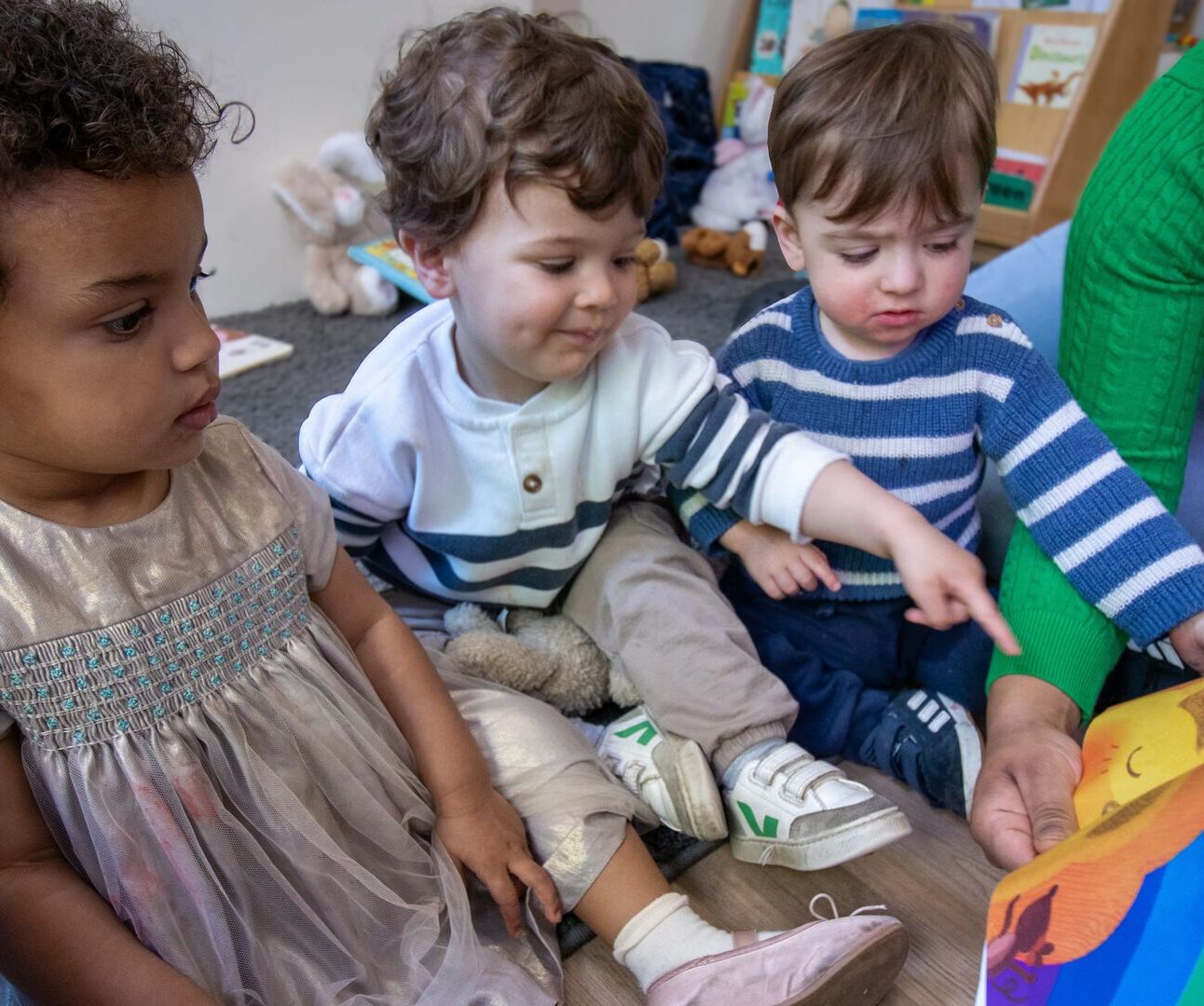
But none of this requires a child to spend their day looking at a screen. I have often used the phrase “no app can replace your lap”. It sounds simple, but there is a serious pedagogical principle underneath it.
Young children develop through relationships. They need conversation, movement, touch, nature, risk, imagination, boredom, negotiation and long periods of uninterrupted play. Technology must fit around childhood, not childhood around technology.
Building Digital Literacy Through Play
More recently, my thinking has moved towards digital literacy and children’s agency. At EECERA I was particularly struck by discussions about how we can develop the foundations of digital understanding through play.
Perhaps we have been starting in the wrong place. Before coding comes sequencing, pattern, prediction, logic and problem-solving. Before digital literacy comes language, curiosity and questioning. Before online safety comes learning about permission, boundaries, trust and knowing that you can say no.
A three-year-old does not need a lecture on data ownership. But they can understand: “Did you ask before taking my photograph?” “Can I say no?” “Who does that belong to?” and “Who gets to decide?”
These are the beginnings of digital agency, and they belong naturally within a democratic Early Years pedagogy. My recent writing on digital literacy has increasingly led me back to this point: it is fundamentally about pedagogy, not screens.
This is why nursery design needs to anticipate the digital future without being seduced by it.
Children’s Rights, Privacy and Digital Agency
Take surveillance. CCTV may be introduced in the name of safety, but does more surveillance automatically create a safer nursery? What does it communicate about trust in teachers? What does it mean for children’s privacy and dignity?
We should ask the same questions about facial recognition, digital tracking and the data generated about children. Just because technology allows us to do something does not mean we should do it.
There is also a social justice question. We need to be careful that children experiencing disadvantage do not become either the most digitally excluded or the most digitally exposed. Access matters, but so do quality, purpose and agency.
AI, Digital Technology and Sustainability in Nurseries
There is also a sustainability question. AI and digital infrastructure are not weightless clouds floating somewhere above us. They require energy, water, minerals, equipment and data centres. Our digital choices therefore belong inside our sustainability thinking too.
All of this is why I think Early Years needs a much stronger voice in the national conversation about AI, digital technology and education.
At present, much of that debate understandably starts with schools, while the Early Years discussion often begins and ends with screen time and online safety. There is an important space between the two.
We should be talking about how young children develop the foundations of digital literacy, how we prepare teachers, how technology affects nursery environments, how we protect children’s rights and data, and how we use AI and technology without displacing relationships, play, creativity and human judgement.
Why Early Years Needs a Stronger Voice on AI
The nursery of the future does not need to look like a technology showroom. It needs to look like a wonderful place for children.
The technology should be there when it genuinely improves children’s lives, supports teachers, strengthens inclusion or reduces our environmental impact. And sometimes good design will mean deciding that technology should not be there at all.
Design is both a pedagogical tool and a moral statement. The spaces we create tell children what we value. In a world increasingly shaped by AI, I want our nurseries to tell them that we value their curiosity, their agency, their relationships, their rights and their humanity.
And I want Early Years teachers to have the knowledge and confidence to help children navigate that world, rather than simply leaving them to inherit it.
Do We Need an Early Years AI and Digital Childhood Advisory Group?
Perhaps we now need to go further as a sector. If Early Years is to have a stronger voice in the national conversation about AI and digital technology, we need somewhere to bring together the different parts of this debate: pedagogy, child development, digital literacy, children’s rights, inclusion, sustainability, safety, ethics and the practical realities facing teachers and families.
I am therefore interested in whether there would be sector support for an Early Years AI and Digital Childhood Advisory Group, bringing together Early Years teachers, academics, child development experts, children’s rights specialists, parents and those with expertise in AI and EdTech.
Its purpose would not be to promote more technology in Early Years. Quite the opposite. It would help us define what age-appropriate AI and digital literacy looks like from birth to five, what teachers need to know, what we should be cautious about and how we prepare children for a digital future without sacrificing the things we know matter most in childhood.
Perhaps most importantly, it would give Early Years a collective voice before the decisions are made for us.
So, I would really like to know what you think. Do we need an Early Years AI and Digital Childhood Advisory Group? And if we do, what are the questions you think it should be asking?
Frequently Asked Questions About AI in Early Years Education
What is AI in Early Years education?
AI in Early Years education refers to the use of artificial intelligence and related digital technologies in early childhood settings. These technologies may support administrative tasks, communication, planning and the management of nursery environments. Their use should be guided by children’s development, relationships, play and wellbeing.
How can digital literacy be developed in young children?
Digital literacy can begin through age-appropriate, play-based experiences that develop sequencing, pattern recognition, prediction, logic, problem-solving, language and questioning. Children can also begin to understand permission, boundaries, trust and the right to say no, without needing to spend more time looking at screens.
Should young children use AI in nursery settings?
The decision should start with the purpose and potential impact on children, rather than the availability of technology. AI and digital tools should only be considered where they offer a meaningful benefit, with appropriate safeguards for children’s privacy, safety, relationships and development.
What are the risks of AI and digital technology in Early Years?
Key considerations include children’s privacy and data protection, surveillance, digital exclusion, unequal exposure to technology, sustainability and the risk of technology displacing relationships, creativity, physical activity and uninterrupted play. These questions require careful consideration by Early Years professionals and the wider sector.
What would an Early Years AI and Digital Childhood Advisory Group do?
The proposed group would bring together Early Years teachers, academics, child development experts, children’s rights specialists, parents and AI and EdTech specialists. It would explore age-appropriate digital literacy, teacher knowledge, children’s rights, inclusion, safety, ethics and the responsible use of technology in Early Years settings.
Why is digital agency important in early childhood?
Digital agency means developing the foundations for children to question, understand and participate in decisions about technology. In Early Years, this can begin with everyday experiences involving permission, personal boundaries, ownership, trust and the ability to say no.