
To Coracle, or Not to Coracle: That is the Question
Safe Sleep Needs Clarity, Not Confusion Whenever a baby dies, every one of us in Early Years is shocked, distressed and cannot quite comprehend that someone who…
June 29th 2026
I have always had enormous respect for the work of Loris Malaguzzi and Carlina Rinaldi. Reggio Emilia emerged from a unique historical, political and cultural context and, for that reason, I have never been entirely comfortable with those who describe themselves simply as “Reggio”. Educational philosophies are not commodities that can be packaged up and exported. They are shaped by the communities that create them and sustained by the values that underpin them.
What can travel, however, are the ideas, questions and principles that encourage us to think differently about children, ourselves and the purpose of education.
That is why I found Anne Macken’s presentation during the International Day of Play webinar, Realising Children’s Rights Through Reggio-Inspired Practice, so compelling. Anne did not present Reggio Emilia as a model to be copied. Instead, she offered a thoughtful and deeply reflective account of how some of its central concepts had challenged her own assumptions, influenced the development of practice in her setting in County Tipperary and strengthened the confidence of both educators and children. It was a powerful reminder that educational philosophy only becomes meaningful when it is translated thoughtfully into local practice.
As I listened, I found myself reflecting on our own journey at LEYF. Over many years we have developed what we now describe as our Social Justice Pedagogy, not by borrowing wholesale from any one tradition, but by drawing together ideas that help us create equitable, democratic and inclusive learning communities. Like Anne, we have discovered that the most important shift is not introducing new activities or resources but changing the way adults think about children. Once we genuinely see children as competent, curious citizens with rights, aspirations and remarkable capabilities, our environments, relationships and curriculum begin to change accordingly.
This image of the child lay at the heart of Anne’s presentation. Through a series of beautifully chosen examples she demonstrated how seemingly ordinary experiences communicate extraordinary respect. Babies drinking confidently from real glasses, toddlers preparing fruit independently, children pouring milk from glass jugs, dressing themselves and using real crockery are not simply exercises in promoting independence. They are expressions of trust. They communicate to children that they are viewed as capable contributors rather than passive recipients of adult care.
Anne reflected that it is often adults, rather than children, who need to reconsider their expectations. Her story of a parent expressing surprise that her eighteen-month-old daughter could confidently drink from a real glass illustrated perfectly how easily our assumptions can limit children’s opportunities. It reminded me that social justice begins not with intervention but with expectation. When adults raise their expectations of children’s competence, children frequently exceed them.
Anne spoke movingly about her own visit to Reggio Emilia and how it challenged those expectations. Standing before intricate clay sculptures created by five-year-olds, she initially questioned whether children could really have produced work of such sophistication. By the end of her visit she was no longer questioning the children but questioning herself. That willingness to interrogate our own assumptions lies at the heart of reflective practice and is perhaps one of the greatest gifts that Reggio Emilia continues to offer educators across the world.
What particularly impressed me was the consistency with which these principles were embedded throughout the nursery. Anne described a seemingly mundane feature, the gates separating the baby and toddler rooms, which prompted an unexpected conversation with a visiting university tutor. The visitor admired them because they would make excellent barriers for containing a dog. Anne gently explained that she saw something entirely different. The gates were not barriers at all. They created opportunities for children to observe the life of the nursery, watch deliveries arrive, greet parents, wave to the postman and interact with children in neighbouring rooms. What one adult interpreted as separation, Anne understood as connection.
It immediately reminded me of the work we explored in Nursery Design with Children at the Heart. We argued that environments are never simply physical spaces; they communicate values, influence relationships and shape children’s participation. Anne’s story illustrated that beautifully. The physical structure itself had not changed. What mattered was the educational thinking that gave it meaning.
The same philosophy was evident throughout her curriculum. Children as young as two are introduced to carpentry using real tools, while a shared clay studio provides opportunities for sustained exploration, collaboration and creative expression. These experiences are not isolated activities but part of a coherent pedagogy built upon trust, responsibility and curiosity.
Equally impressive was Anne’s development of ‘Champions of Practice’, where educators develop specialist expertise in areas such as sustainability, clay, carpentry and nature education before sharing their knowledge across the wider team. Professional learning therefore becomes collective rather than individual, strengthening confidence, deepening reflection and ensuring that good ideas become part of the culture rather than remaining the enthusiasm of a single educator.
Perhaps the aspect of Anne’s presentation that resonated most strongly with me was her discussion of documentation. Like many organisations, her team initially viewed documentation as a means of recording children’s learning. Through more than a decade of reflective practice, documentation has evolved into something altogether more significant. It has become a professional thinking tool that supports observation, stimulates dialogue, informs planning and encourages educators to ask increasingly sophisticated questions about children’s learning.
That journey felt very familiar. At LEYF we have also come to understand that documentation is not primarily about proving what children have done. At its best it changes how adults think. It helps us notice children’s theories, recognise emerging interests, strengthen conversations with families and reflect more deeply on the learning taking place. Good documentation is therefore less concerned with producing attractive displays than with developing reflective educators.
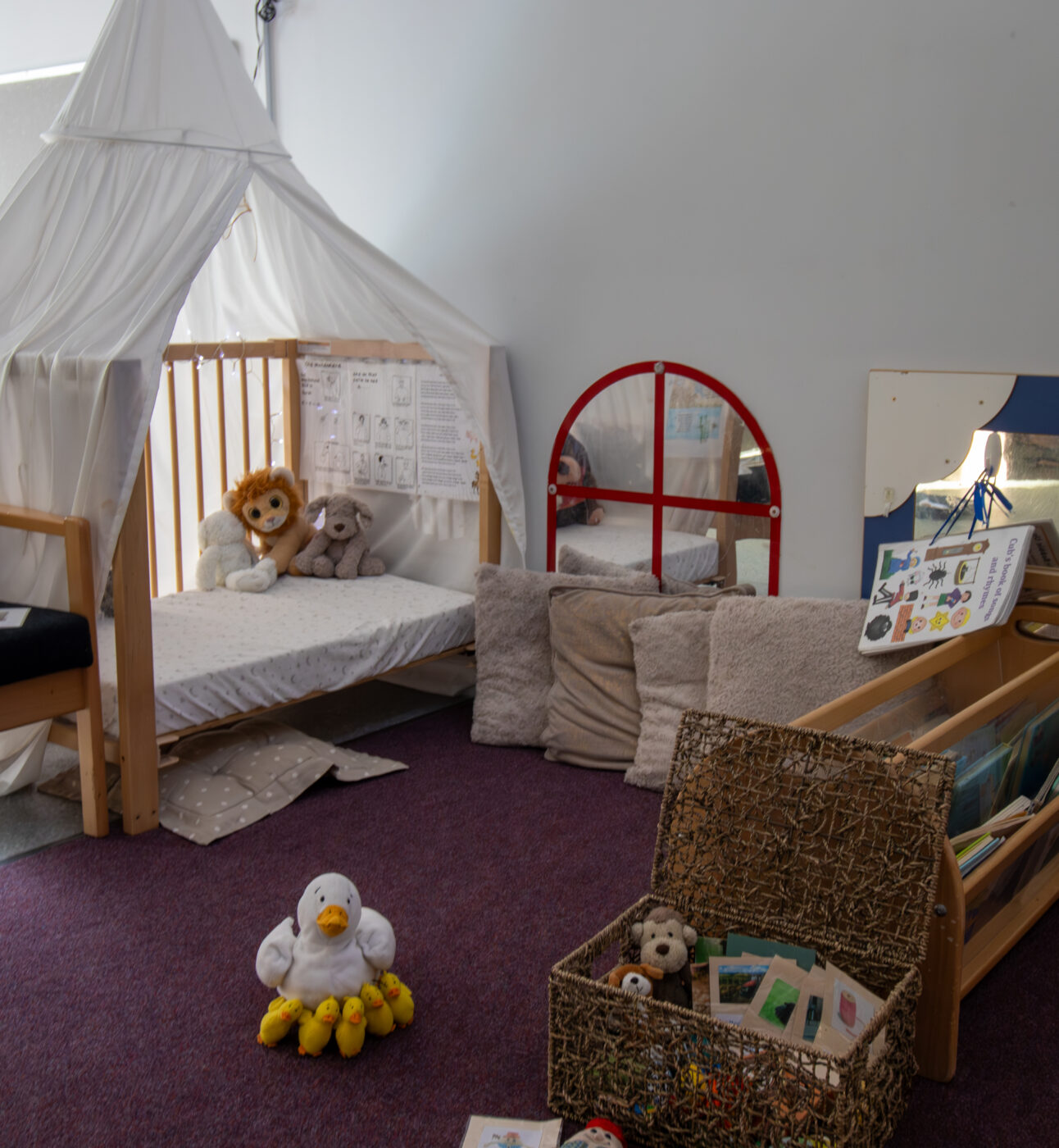
Children’s rights were also made visible in ways that felt authentic rather than performative. Family photographs are displayed at children’s level, allowing babies to carry them, revisit them during the day and even take them into their sleep spaces for comfort. Every room contains a projector through which photographs and videos from home become part of children’s everyday experience in nursery, reinforcing belonging and strengthening relationships with families. These simple but thoughtful practices acknowledge that children never leave their identities at the nursery door.
One particularly memorable example concerned a young girl whose fascination with litter gradually developed into a sustained exploration of recycling and environmental responsibility. Rather than treating this as a passing interest, educators listened carefully, revisited her thinking and allowed her ideas to influence the curriculum. She became the nursery’s ‘litter warden’, developing confidence, agency and an understanding that her ideas could make a genuine difference. It reminded me of our own research into children as environmental stewards, where children similarly demonstrated that, when adults genuinely listen, young children are more than capable of contributing thoughtfully to environmental sustainability. Children’s rights are realised not through policy statements but through adults who are prepared to take children’s ideas seriously.
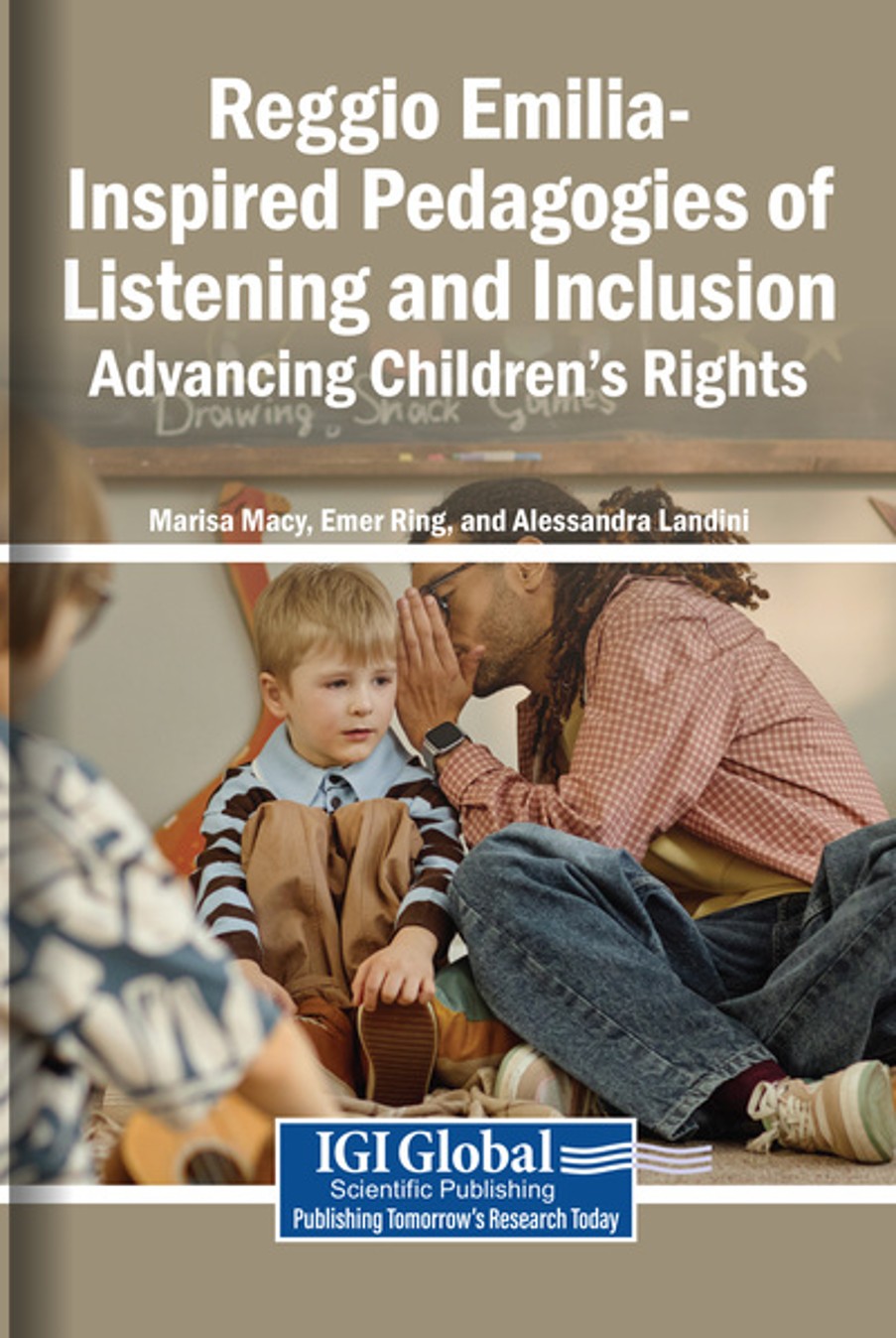
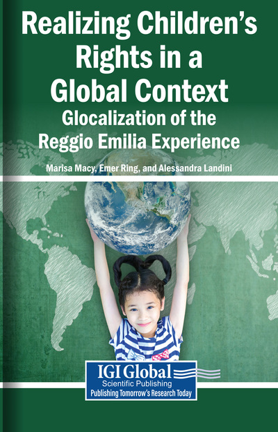
It was therefore fitting that the webinar also celebrated the launch of two important international publications, Realizing Children’s Rights in a Global Context: Glocalization of the Reggio Emilia Experience and Reggio Emilia-Inspired Pedagogies of Listening and Inclusion: Advancing Children’s Rights. Both books explore how the values that emerged in Reggio Emilia continue to evolve as they encounter different cultures, educational systems and communities across the world. Rather than advocating replication, they invite educators to interpret these ideas critically and develop approaches that remain authentic to their own contexts.
For me, that was the enduring message of Anne Macken’s presentation. She has not attempted to recreate Reggio Emilia in County Tipperary, nor should she. Instead, she has demonstrated how educational ideas can travel with integrity when they are accompanied by humility, reflection and professional curiosity. At a time when early childhood education is increasingly shaped by accountability frameworks, standardisation and compliance, this felt both refreshing and hopeful. It reminded me that the best educational philosophies do not provide templates for imitation. They encourage us to ask better questions about children, about ourselves and about the kind of society we are helping to build.
If you missed the webinar, I would strongly encourage you to watch the recording and explore the two accompanying publications. Whether you work in Ireland, England or further afield, they offer thoughtful insights into how children’s rights can move beyond aspiration and become visible in the everyday experiences of children, families and educators.
A recording of the webinar is available to view here.
Safe Sleep Needs Clarity, Not Confusion Whenever a baby dies, every one of us in Early Years is shocked, distressed and cannot quite comprehend that someone who…
Why Are So Many Children Starting School Not Toilet Trained? More than a decade ago, I wrote about toilet training after the Association of Teachers and Lecturers reported that 71%…
Take a look around– concrete high-rises dominate our skylines, and even the courtyards of upscale developments are often little more than hard brick and stone. Where, then, are children expected…