

Margaret Horn Debate 2025
Is the government’s offer of childcare from nine months truly in the best interests of babies or more about boosting the economy? The annual Margaret Horn debate always tries to…
November 17th 2026
Something is happening to childhood, and I am not sure we are paying enough attention. We have become increasingly concerned about children’s weight, fitness, mental health, school readiness and independence, yet we seem remarkably reluctant to join the dots. We discuss obesity as a problem of food, children’s behaviour as a problem of regulation and school readiness as a problem of what children cannot do. Meanwhile, one of the most fundamental aspects of childhood, physical development, is often treated as an optional extra, something to squeeze in between phonics, lunch and the next adult-led activity. Perhaps Bob Dylan had a point when he sang, “Something is happening here and we don’t know what it is.” The trouble is that we do know but we are still arguing about what it is.
Childhood obesity is certainly one of the warning signs. England’s National Child Measurement Programme has repeatedly shown that around one in five children starting Reception is living with overweight or obesity, with the prevalence of obesity substantially higher in disadvantaged communities. The figures are troubling enough, but what concerns me most is the inequality behind them. Children growing up in poverty are more likely to experience the conditions that contribute to poor health, including food insecurity, limited access to safe outdoor spaces and neighbourhoods where walking, cycling and playing outside are not always straightforward.
We have created an extraordinary situation where some families struggle to afford enough nutritious food while living surrounded by cheap, heavily marketed, energy-dense products. We then tell them to make healthier choices, preferably while walking 10,000 steps and avoiding anything that tastes remotely interesting. If only public health were that simple.
I have been banging this drum for years. When we conducted research at the London Early Years Foundation (LEYF) in 2021, we found that almost a third of parents surveyed said their families could not afford balanced meals. Only 39% of the teachers surveyed felt very confident about nutrition for children aged one to four, and just 24% were very confident about appropriate portion sizes. We also found considerable enthusiasm among parents for better nutritional support.
This was one reason we established the LEYF Early Years Chef Academy in 2019. I have always argued that nursery chefs are educators too. They help shape children’s relationships with food, introduce new tastes, support healthy eating habits and create opportunities for children to understand where food comes from. A nutritious lunch is not simply a catering transaction, although you might be forgiven for thinking so when looking at how little attention, we sometimes give to the people preparing it.
But here is the problem. We cannot address children’s health through nutrition alone, important though it is. We also need to understand what is happening to their opportunities to move. And this is where the conversation becomes rather uncomfortable.
When did we become so nervous about children climbing trees, jumping from logs, rolling down hills, getting muddy, walking in the rain or balancing on walls? I am not suggesting we return to some imaginary golden age when children apparently spent every waking moment outdoors, returning home only when someone shouted that their tea was ready. Childhood was never quite that idyllic, and many children have always faced barriers to safe play. But I do wonder whether our understandable concern for children’s safety has gradually developed into an excessive desire to remove uncertainty from their lives. We have risk assessments for almost everything but sometimes seem less willing to assess the risk of children not having enough opportunities to take risks, something I discussed with Ellen Sandsetter who defined the difference between risk and danger in education.
Schools face their own pressures. Teachers are expected to deliver an increasingly demanding curriculum, demonstrate progress, manage behaviour and prepare children for the next stage of education. Movement can become something that happens at playtime, during PE or when there is a spare moment. Yet movement is not separate from learning. It is one of the ways young children learn.
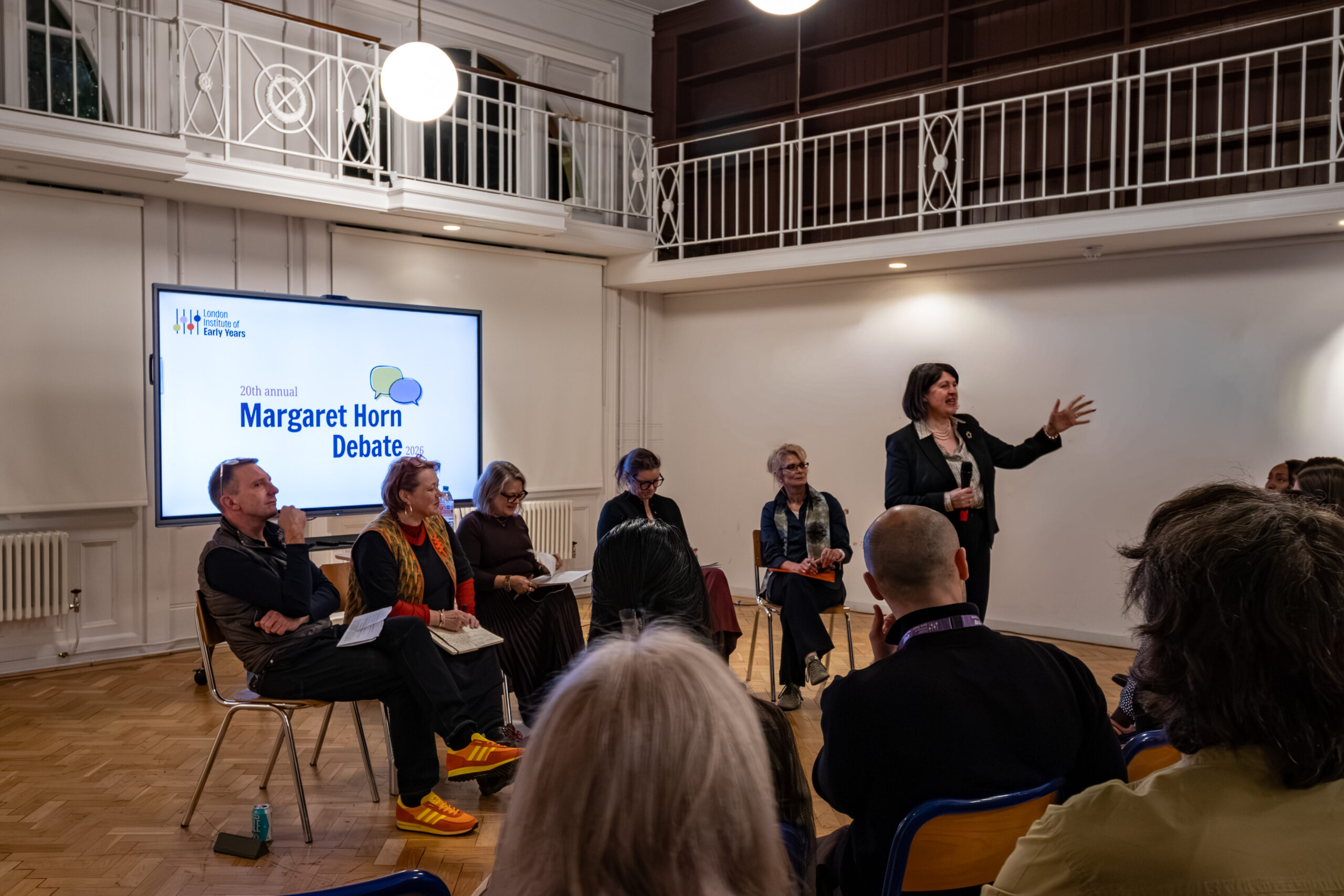
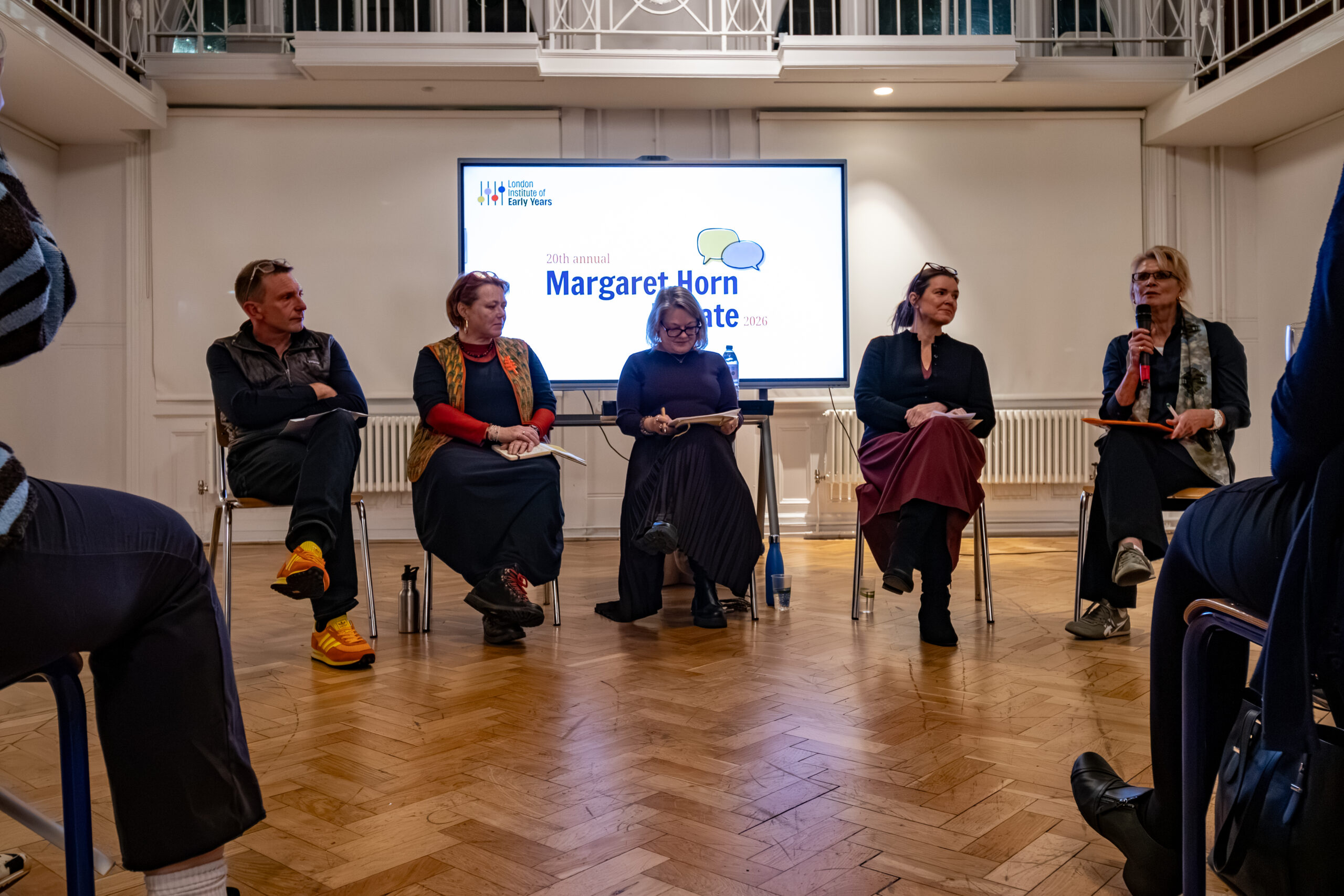
This was the challenge we put at the heart of our 20th annual Margaret Horn Debate on 12 November, when we brought together Lala Manners, Felicity Gillespie, Jim Blakemore, Cath Prisk with Catherine Gaunt from NurseryWorld chairing, to tackle the deliberately provocative question: Are we pushing children into school before their bodies are ready? It is a question that should make all of us slightly uncomfortable because it asks adults to examine our own decisions. Are we designing schools, nurseries, homes and communities around children’s developmental needs, or expecting children to fit into environments that don’t always recognise how they learn? We can debate school readiness until the cows come home, but unless we take some collective responsibility for changing children’s experiences, we risk becoming very good at describing a problem and rather less effective at solving it.
This is why I wrote Ready, Steady, Go! with Lala Manners. We wanted to challenge the way physical development is understood, valued and supported, particularly in the Early Years. Too often, it is reduced to a list of milestones: sitting, crawling, walking, running, jumping, holding a pencil or using scissors. These skills matter, of course, but they are only part of a much bigger developmental picture.
Children learn through their bodies. They discover distance by moving through space, balance by experimenting with instability, and coordination by trying, failing, adjusting and trying again. They learn about relationships by negotiating who gets the bicycle, who leads the game and how to avoid crashing into someone who has suddenly decided to become a dinosaur. They develop spatial awareness, body awareness, confidence and the ability to judge what their bodies can do.
Even the humble cardboard box can become a vehicle for physical, cognitive and imaginative development. It can be pushed, pulled, climbed into, crawled through or transformed into a spaceship. The child does not need an adult standing nearby announcing that the activity is developing proprioception, bilateral coordination and executive function. Fortunately, children are not waiting for us to explain the learning before they begin. Yet adults do need to understand what is happening, because physical development is far more complex than simply strengthening muscles.
Consider the vestibular system, which contributes to balance and our sense of movement, or proprioception, which helps us understand where our bodies are in space. These systems support children’s ability to coordinate movement, navigate their environments and participate in everyday activities. When children climb, spin, balance, stretch, crawl and explore different surfaces, they encounter a rich variety of sensory and physical experiences.
Understanding these connections changes how we observe children. A child who struggles to sit comfortably may not simply be refusing to listen. A child who avoids climbing may need opportunities to develop confidence, strength or coordination. Another who finds dressing difficult may be managing a complex combination of balance, body awareness, fine-motor control and sequencing. We need to become more curious about what children are experiencing rather than immediately judging what they cannot do.
This matters particularly when we hear concerns about children arriving in Reception without the independence expected of them. Dressing, managing toileting, using cutlery, putting on shoes and organising belongings all involve physical skills developed through experience, repetition and sensitive support. Children develop at different rates, and some require additional help or adaptations. But we must also ask whether they have enough time and opportunity to practise these skills.
It is tempting to blame screens, and there is certainly a serious conversation to be had about the displacement of active play by prolonged sedentary activities. However, the issue is more complicated than declaring war on tablets. High-quality digital experiences can support learning, creativity and communication. The question is what they replace. If children spend more time watching someone else build a tower, climb a mountain or explore a forest than doing any of these things themselves, we should be concerned about the experiences they are missing.
Nor should we confuse being physically active with being sporty. Not every child wants to play football, race around a playground or join a team. Some prefer gardening, dancing, building, carrying, balancing, exploring nature or inventing elaborate games that make perfect sense to the participants and absolutely none to the adults. Physical development is not about producing miniature athletes. It is about ensuring every child has opportunities to discover the possibilities of their own body.
This brings us back to social justice. A child living in a small flat beside a busy road may have very different opportunities from one with a garden, access to parks and parents who have the time and resources to organise outdoor activities. Children with disabilities may encounter additional barriers when environments are poorly designed or activities are not adapted. Families juggling insecure work, long journeys, financial pressures and caring responsibilities may have little opportunity to provide the outdoor experiences we so casually recommend.
We cannot solve these inequalities by telling parents to take their children outside more often. We need safe streets, accessible parks, welcoming community spaces and Early Years settings and schools that deliberately create opportunities for physical exploration. We also need educators who understand physical development well enough to design environments that invite children to move, experiment, challenge themselves and participate.
This is where pedagogy matters. It is not enough to have a playground if children are constantly told to stop climbing, slow down, keep clean or avoid anything that looks remotely adventurous. Equally, adventurous play does not mean abandoning children to unnecessary danger. It means understanding the difference between hazards that need managing and challenges that children can learn to negotiate. We should be helping children develop judgement, not simply removing every opportunity to use it. We need a much richer understanding of what it means for children to be physically capable, confident and healthy.
That is why Lala and I wrote Ready, Steady, Go!. We wanted a book that would make physical development understandable, practical and impossible to dismiss as something that happens naturally if we simply leave children to it. We explore how children’s bodies develop, how movement connects with learning and wellbeing, why sensory experiences matter, and how adults can create the conditions for children to become more confident and independent. We also challenge some familiar assumptions about what children should be able to do, when they should do it and how we can support them without turning childhood into an obstacle course of developmental targets.
The book is for teachers, leaders, parents, students and anyone interested in what children need to flourish. It is not another instruction manual telling families everything they are doing wrong. There are quite enough of those already. It is an invitation to understand children better and to recognise the extraordinary learning taking place when they move.
Because the real question is not simply whether we can reduce childhood obesity, important as that is. It is whether we are creating childhoods in which children have the freedom, confidence, skills and opportunities to be active participants in their own lives.
If we want children to arrive at school ready to learn, we must understand how much of that learning has already begun through their bodies. If we want them to become independent, we must give them opportunities to practise independence. If we want them to develop confidence, we must allow them to experience challenge. And if we want healthier children, we must design healthier environments rather than placing the responsibility entirely on families.
So, before we commission another strategy, issue another set of targets or tell children to sit nicely while we explain the importance of physical activity, perhaps we should understand what movement actually means to them.
Not because every child needs to become an athlete, but because every child deserves adults who understand how their body develops, how movement shapes their experiences and why physical development matters to their learning, confidence, independence and life chances. Children only get one childhood. Let’s make sure every child has the freedom to move, to belong and to thrive.
Read Ready, Steady, Go! The physical foundations of learning and development in early childhood, by June O’Sullivan and Lala Manners is available to buy at Amazon, RRP £14.99
Is the government’s offer of childcare from nine months truly in the best interests of babies or more about boosting the economy? The annual Margaret Horn debate always tries to…