

Rights, Relationships and Respect: A Timely Book for EY Professionals
There are some books that arrive at exactly the right moment, and Babies’ and Toddlers’ Rights in Practice by Mary Moloney,…
January 20th 2026
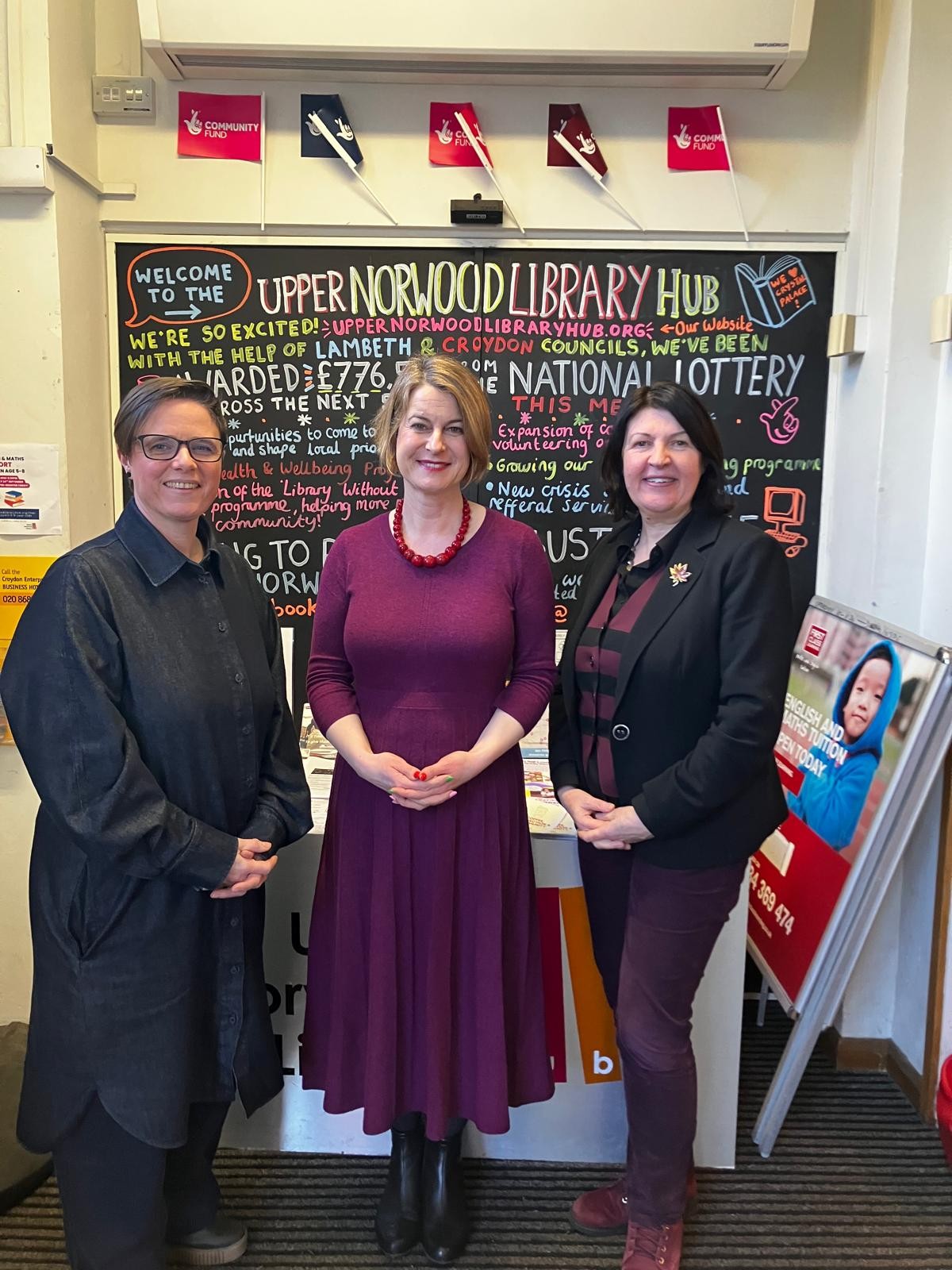 Last week, we were delighted to welcome Helen Hayes MP to the Upper Norwood Library Hub, where I have the privilege of serving as a Trustee. Helen is our local MP, but she also chairs the Education Select Committee, so her visit felt both personal and political. It mattered that she came not just as a decision-maker, but as a listener, stepping into a living, breathing community space rather than reading about it from a briefing paper.
In November, Helen launched a new Education Select Committee inquiry into the decline in children’s reading for pleasure. The figures are sobering. Only 33% of children and young people aged 8 – 18 now read in their spare time, a drop of 36% since 2005. The inquiry is rightly asking difficult questions about what has changed, including the impact of increased screen time, the role of schools and Early Years settings, and the place of libraries in children’s lives. As Helen herself has noted, reading has traditionally offered children both stimulation and sanctuary. What does it mean that so many are turning away from it?
Standing in the library with her, the answers felt less abstract. Libraries are not nostalgic luxuries. They are democratic, inclusive, preventative infrastructure. Once you lose a library building, you never get it back. Across the UK, libraries are shutting at an alarming pace, often with little notice and dressed up as unavoidable. But ‘unavoidable’ is a decision, not a fact.
BookTrust has done more than most to understand how children develop a relationship with books and why that relationship matters. I hope they have submitted strong evidence to the inquiry because their research consistently shows that reading for pleasure is linked not only to attainment, but to wellbeing, empathy and agency.
My own love affair with libraries began early. From the moment I was allowed to walk into town on my own, you would find me every Saturday in Cork City Library, taking out two books for myself and two for my grandmother. I was that irritating child who, on discovering three books I desperately wanted, would hide one behind the philosophy shelves, hoping it would still be there the following week. Years later, taking my own children to Wandsworth’s Alvering Library, (now a school!) I was overjoyed to discover that we could each take out six books. Abundance matters.
Libraries also saved me as an adult learner. When I was studying for my Open University degree, Battersea Reference Library became my refuge, the only place I could think clearly away from small children and a house permanently mid-DIY. Libraries have always been places where I could breathe, think, and become.
That is why the work of the Upper Norwood Library Hub (UNLH) matters so deeply. We are thrilled to have received a five-year grant from the National Lottery, recognising the role libraries play in helping communities come together through accessible, welcoming spaces. At UNLH, this means children and family literacy, creative education camps, mentoring, summer clubs, health and wellbeing activities and, for me personally, my weekly Tai Chi. It also means crisis signposting and informal support that many people struggle to find elsewhere. Libraries quietly do the work of prevention.
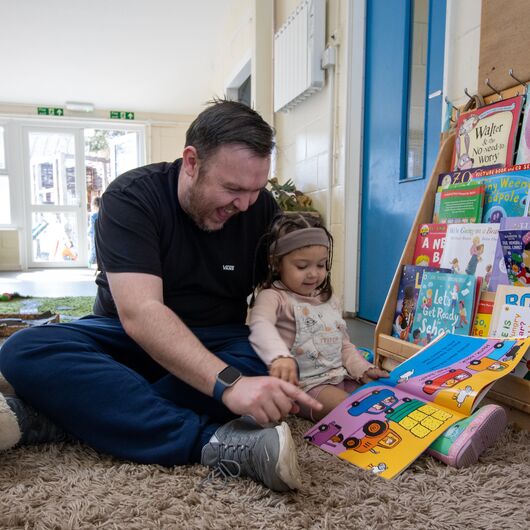
They are also places of quiet, and that matters more than we are willing to admit. At LEYF, we take children from our nurseries to the library not just to borrow books, but to learn how to be in a shared, calm space. Children need to experience quiet. Adults need to protect it. Libraries are among the few remaining places where silence is not awkward but welcomed. Where children can wallow, muse, and play with language at their own pace.
This feels especially urgent in the context of screen time. More than half of young children now use live-streaming apps or social media. A quarter of children aged three to five have their own phone, and 60% have a personal social media profile. Screens strip away around 93% of communication: tone, body language, micro-expressions. Emojis flatten complex emotions. Screen culture rewards copying rather than creating, speed rather than depth. It does not support the lingering, imaginative engagement that books demand and delight in.
As the Government consults on determining the right minimum age for children to access social media, including exploring a ban for children under a certain age, this is also a timely reminder that the best antidote to endless scrolling is still sitting quietly on our high streets: a warm, welcoming library, where children can swap screens for stories, and rediscover the simple joy of reading.
There are some books that arrive at exactly the right moment, and Babies’ and Toddlers’ Rights in Practice by Mary Moloney,…
Launching the Reading Rights Summit in Liverpool Last week, Booktrust (where I proudly serve as a Trustee) hosted the Reading Rights Summit. We were joined by special guests, the…
It is Good to Talk! The signs of things going wrong in society are usually first evident in small children. The widespread dependence on Smartphones is…